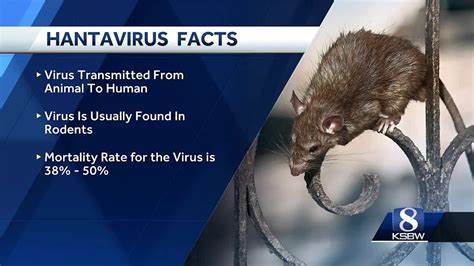
Hantavirus, a family of viruses primarily transmitted by rodents, has long been a concern in Europe, but recent outbreaks and scientific research suggest that climate change and habitat destruction are exacerbating the risks. While Europe has historically managed hantavirus outbreaks with relative success, experts warn that shifting environmental conditions could alter the dynamics of transmission, making the continent more vulnerable to future epidemics. Understanding the interplay between climate, ecology, and public health is crucial for mitigating these risks and protecting European populations.The recent outbreak on the MV Hondius cruise ship, which resulted in multiple fatalities, has reignited global fears of another pandemic. However, the World Health Organization (WHO) has emphasized that hantavirus differs significantly from COVID-19 in terms of transmission and severity. Unlike SARS-CoV-2, most hantaviruses do not spread easily from person to person, with the Andes virus being a rare exception. This distinction is critical in assessing the potential threat hantavirus poses to Europe, where the most common strain, Puumala, is not known to transmit between humans.Climate change is a major driver of emerging infectious diseases, including hantavirus. Rising temperatures, altered precipitation patterns, and extreme weather events can disrupt ecosystems, leading to changes in rodent populations and their interactions with humans. For instance, prolonged droughts followed by heavy rainfall can create ideal conditions for rodent breeding, increasing the likelihood of human exposure to hantavirus-contaminated environments. In Argentina, a surge in cases was linked to drought-induced ecological shifts, highlighting the delicate balance between climate and disease transmission.Habitat destruction further compounds the problem by displacing rodent populations and forcing them into closer proximity with human settlements. Deforestation, urbanization, and agricultural expansion fragment ecosystems, creating conditions that favor adaptable species like rodents. When these environments are disturbed, hantavirus particles can become airborne, posing a direct risk to humans who inhale contaminated dust. The fragmentation of natural habitats also disrupts the ecological checks and balances that regulate pathogen transmission, making outbreaks more likely.In Europe, the Puumala virus is the most prevalent hantavirus strain, primarily transmitted by bank voles. While it causes a milder form of hemorrhagic fever with renal syndrome, it remains a public health concern due to its potential to cause severe illness in some individuals. Climate projections suggest that Northern and Western Europe may become increasingly suitable for rodent species that act as hantavirus reservoirs. Warmer winters and altered precipitation patterns could extend the transmission season, increasing the risk of human exposure.To tackle these emerging threats, Europe must strengthen its surveillance systems by integrating epidemiological, ecological, and climate data. Early detection and rapid response are essential for preventing outbreaks from escalating. Additionally, investing in climate-resilient infrastructure and restoring degraded habitats can reduce the likelihood of zoonotic spillover events. The International Union for Conservation of Nature (IUCN) has highlighted the role of ecosystem restoration in mitigating disease risks, emphasizing that protecting nature is a vital public health strategy.Public health authorities in Europe must also prioritize research to better understand the complex interactions between climate, ecology, and disease transmission. This includes studying the behavior of rodent populations, the impact of extreme weather events on pathogen dynamics, and the effectiveness of preventive measures. By adopting a multidisciplinary approach, Europe can enhance its preparedness for future health threats posed by hantavirus and other emerging zoonotic diseases.In conclusion, while hantavirus does not currently pose an immediate pandemic threat to Europe, the convergence of climate change and habitat destruction is creating conditions that could increase the risk of outbreaks. Proactive measures, including robust surveillance, ecosystem restoration, and climate-resilient infrastructure, are essential for safeguarding public health in the face of these evolving challenges. As Europe navigates the complexities of a changing climate, a holistic approach to disease prevention will be key to protecting its populations from emerging infectious threats. 。
Hantavirus in Europe: Climate Change and Habitat Destruction Amplify Risks