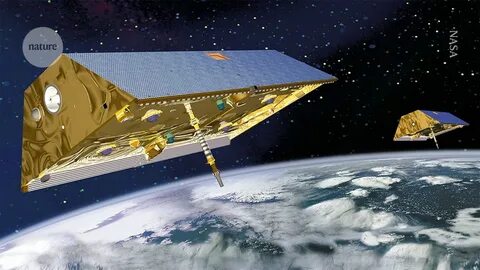
地球,这颗我们赖以生存的星球,其内部结构一直是科学家们探索的重点。尽管地表变化和大气现象日益受到关注,但地球深层的动态变化同样至关重要。最新研究通过卫星技术揭示了靠近地球核心区域物质的神秘改变,这为我们理解地球的内部演化和引力场提供了前所未有的视角。近年来,随着空间技术的发展,科学家借助卫星探测工具深入监测地球内部的微小变化,尤其是引力场的波动。引力场的变化不仅反映了地表上的水文、冰盖等因素,更敏锐地揭示了深层岩石和金属的运动。此类测量常依赖于设计精巧的卫星阵列,如著名的GRACE卫星(Gravity Recovery and Climate Experiment),其工作原理基于两颗卫星之间相互测量距离的微小变化,从而推导地球不同区域的引力变化。
这些卫星自2002年至2017年的运行期间,积累了丰富的数据资源,为科学界解读地球深层运行机制提供了宝贵信息。引力异常的变化意味着地球内部物质发生了重新分布。研究团队通过对GRACE卫星数据的精细分析,确认了地球内核附近存在物质状态和分布的复杂变化。这些变化不仅在空间尺度上分布广泛,而且在时间尺度上表现为一种持续而细微的动态过程。 Earth's core, composed primarily of iron and nickel, plays a pivotal role in generating the planet's magnetic field. The liquid outer core's convection and the solid inner core's growth induce magnetic phenomena critical to shielding the Earth from solar radiation. The newfound gravitational shifts suggest alterations in material flow or phase transitions deep within the core or its boundary. Such processes, though hidden thousands of kilometers beneath the crust, bear direct consequences on surface geophysical observations, including magnetic field fluctuations and seismic activity. Scholars involved in this research are drawn from diverse institutions, applying approaches like geodynamics modeling, seismic data synthesis, and gravity inversion techniques. Their multidisciplinary collaboration merges geophysical data with advanced computational simulations to interpret the underlying causes of detected gravitational perturbations. Mysterious changes within Earth's core can potentially explain several enigmatic geophysical phenomena recorded over recent decades, including irregularities in Earth's magnetic field known as geomagnetic jerks or sudden shifts. Moreover, understanding the dynamics at such depths illuminates the mechanisms driving mantle convection and plate tectonics, which ultimately shape the planet's surface geology and influence volcanic and earthquake activity. The significance of satellite-based gravity measurements extends beyond Earth science; these techniques establish a template for investigating other planetary bodies. For instance, comparing Earth's interior dynamics to those of Mars or the Moon can reveal evolutionary differences and the potential for magnetism elsewhere in the solar system. However, deciphering signals from deep within the Earth presents numerous challenges. The gravitational changes detected by satellites are subtle and easily confounded by near-surface processes such as groundwater depletion, glacial melting, or anthropogenic activities. Distinguishing deep core signals requires comprehensive filtering methods and corroborative geophysical evidence. Continuous improvement in satellite instrumentation and data analytics is critical for isolating these finer signals from the noise. The discovery of mysterious shifts near Earth's core invigorates scientific debate about the planet's long-term evolution. It prompts reconsideration of current models describing core-mantle interactions, compositional heterogeneity, and thermal regimes. These insights offer potential for predicting future changes in Earth's magnetic field and seismic hazards, which bear direct implications for human society. In summary, the ability of orbiting satellites to detect gravitational shifts thousands of kilometers beneath the Earth's surface marks a revolutionary advance in geoscience. It unveils a dynamic and evolving inner Earth, highlighting the intricate connections between its deep interior and surface environment. As research progresses, deeper comprehension of these core changes will enhance our grasp of planetary formation, stability, and habitability. This milestone exemplifies how combining cutting-edge space technology with geophysical expertise continues to push the frontier of human knowledge about our planet's most concealed realms. 。